Home Routines
The exporters who returned from the Canton Fair are already in a panic: it's not that there are fewer customers, but the market trend has changed.
The exporters who returned from the Canton Fair are already in a panic: it's not that there are fewer customers, but the market trend has changed.
The exporters who returned from the Canton Fair are already in a panic: it's not that there are fewer customers, but the market trend has changed.
Picture
The 140th Canton Fair has come to an end.
It is reported that a total of 352,000 overseas buyers from 219 countries and regions around the world attended the fair, an increase of 12.2% compared to the previous session, setting a new record high.
However, the foreign trade professionals who returned from the fair had a different impression: The Canton Fair has changed. It's not that there are fewer customers, but the direction of the market has shifted.
01
The structure of the buyers has changed.
The Canton Fair was packed to the brim, but the foreign trade bosses couldn't hide their smiles?
If anyone says the Canton Fair is quiet, they must be lying. With 352,000 buyers, the exhibition hall was completely filled. However, the number of visitors did not translate into an increase in orders.
- Buyer structure: European and American customers are returning
According to feedback from foreign trade professionals: This year's Canton Fair still had a large proportion of customers from Asia, Africa and Latin America, and a relatively small proportion of European and American customers. However, the situation has improved somewhat.
● "This year, the Indian customers were much fewer than before. I don't know if it's because of visa restrictions."
● "In the tools section, Russian customers were particularly numerous, as well as those from Ukraine, Dubai, South America, and Pakistan. Occasionally, there were also from Germany, France, Switzerland, and Spain."
● "This is the largest number in the past three years. And they were all from countries like Spain, Italy, France, and Germany. There were also quite a few from the Middle East!"
Picture
Official statistics also confirm this: the purchasing power of the EU, the United States, and the countries participating in the "Belt and Road Initiative" increased by 38.2%, 22.2%, and 16.6% respectively, with the proportion of professional purchasers exceeding 75%.
- Type of purchasers: The number of major clients has decreased
At the same time, more than one foreign trade professional has reported that the volume of customers has shrunk.
● "Many customers are small and medium-sized retailers or wholesalers."
● "Previously, the customers who came were large entities with full container orders. Now, the buyers are becoming more conservative and are more likely to ask for a MOQ (Minimum Order Quantity) first before placing an order."
● "Twenty years ago, many customers would place orders on the spot with calculators. Now, the purchasers are mostly experts in China, and they first ask about prices when they come."
The cost of participating in the exhibition has not decreased at all. Spending tens of thousands or hundreds of thousands of yuan has resulted in only a few business cards and a few sample orders.
No wonder some bosses sighed, "We spent money, witnessed the excitement, but we haven't seen many big deals."
Picture
02
The transaction logic has changed.
From "having to go" to "being afraid not to go".
Could it be that there are no quality buyers at the Canton Fair site?
Of course not. The big companies had already had stable suppliers before the event began.
One salesperson put it very simply: "My major clients come to our booth just to check if we are reliable and stable. Then they go around the exhibition hall to learn about the new products and trends in the industry. Finally, they ask the prices at our competitors' booths to prevent us from offering prices that are too outrageous."
The current Canton Fair is more important in that it lets customers know that we are still alive and doing well.
Picture
(Image source: Internet. Please remove if copyrighted.)
I know of one boss who failed to secure a booth at the Canton Fair this year. The clients he was in contact with were in a hurry and, upon hearing that there were no booths available, all rushed to the Canton Fair to visit it instead of coming to inspect the factory.
He said, "No matter what measures we take next year, we must definitely get a booth."
This is the reality of international trade. Participating in the exhibition doesn't guarantee you will have clients; not participating in the exhibition might lead to the loss of clients.
03
The product structure has changed.
Some people are going hungry, while others are overfed.
Interestingly, at the Canton Fair, there is a stark contrast between hot and cold:
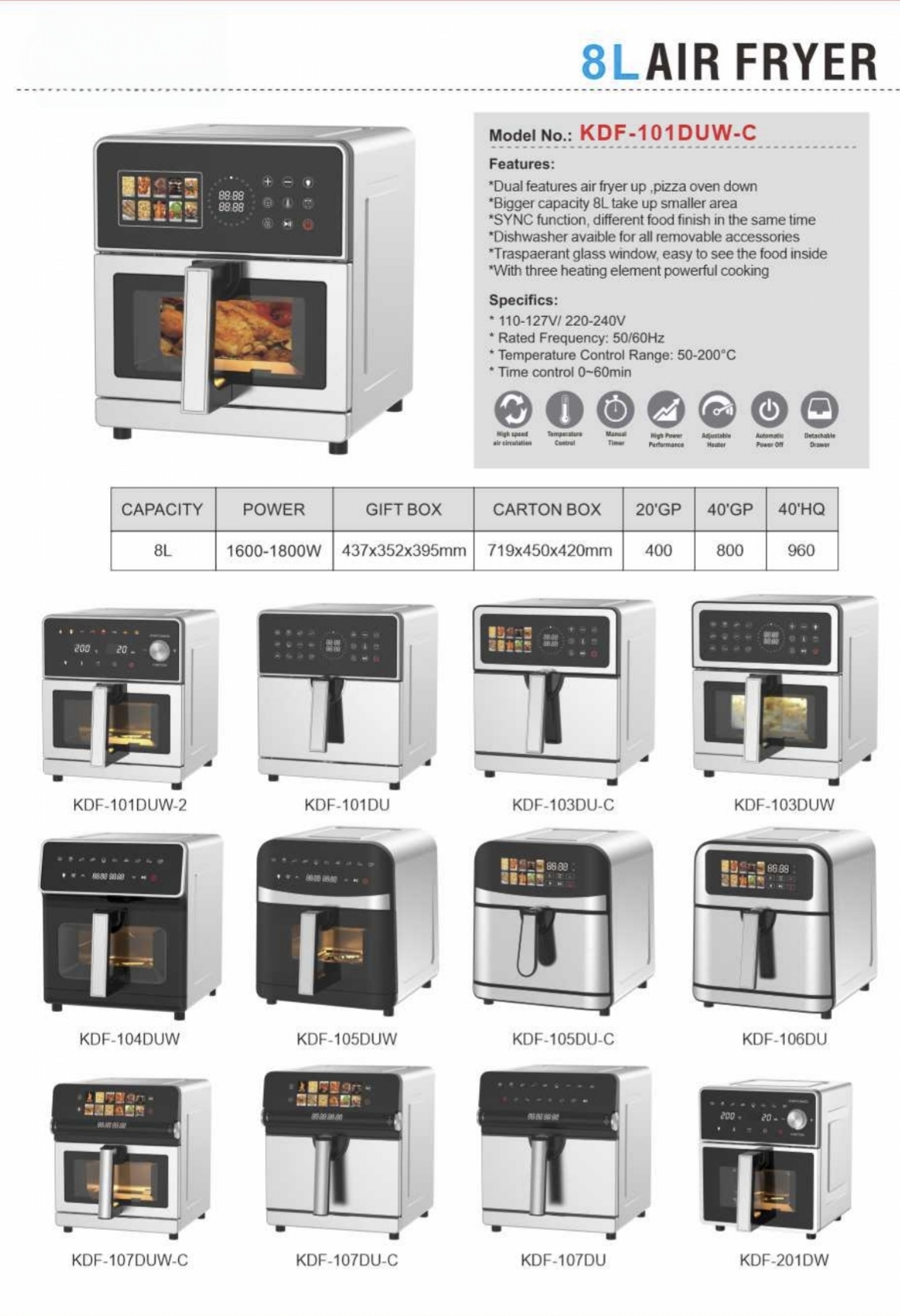
● Booths for outdoor modular houses and temporary buildings can receive hundreds of buyers in a day. At the booths for home appliances and smart devices, a group of people gather to experience and try them out, and orders are placed on the spot.
● On the other hand, the traditional clothing, shoes, and hardware sections are conspicuously deserted. Salespeople are idly using their phones to kill time.
It's not that foreign trade has failed; it's just that the categories you are dealing with might be being marginalized.
Picture
(Image source: Internet. Remove if inappropriate.)
What else can foreign trade enterprises do? The enterprises that have received orders are all similar:
● Those relying on strong capabilities to secure positions: For instance, Shipman Electronics is the only national high-tech enterprise in the field of fishing gear, making fishing boat remote control equipment for fishing nets. They don't have to worry about orders at all;
● Those focusing on meeting specific market demands: Top Pumping mainly focuses on solar water pumps. This year, the increase in oil prices led to a surge in orders. En Da Intelligent is concentrating on mobile cooling for European air conditioning restrictions. They all focus on "requirements that large factories don't consider and small factories can't fulfill";
● Those selling integrated solutions overseas: Maobo Weir not only does ODM manufacturing for mobile phones, but also helps customers select factory locations, plan production capacity, design factories, arrange production lines, and recruit workers in South Asia and Africa.
04
The foreign trade lead-generation model has changed.
The Canton Fair has gradually become a price comparison platform.
What makes foreign traders even more frustrated is that spending tens of thousands of yuan on an exhibition actually intensified the internal competition.
One salesperson quipped: "I quoted the price based on the cost line. I didn't dare to add a single penny of profit. But the foreigners still said it was too expensive. I'm almost suffering from PTSD over this word. It's better to take two orders on 1688."
Even enterprises that didn't participate in the exhibition were affected: "As long as the client says they will go to the Canton Fair, the order is basically lost. The quotations there are getting lower and lower. We have no advantage at all."
Picture
Essentially, both the Canton Fair and traditional B2B platforms operate on the "booth logic": a buyer is presented with hundreds of suppliers, and the more homogeneous the products are, the harder it is for the buyer to make a decision, and they will only focus on the price. Eventually, there will be no profit left and they will have to rely on sheer perseverance.
This is why more and more foreign trade enterprises are choosing to build private domain independent websites, create social media content, dig customs data, and actively seek out precise customers.
Rather than competing with each other in the exhibition hall by offering lower prices, one-on-one precise inquiries can actually lead to more reasonable profits.
Picture
05
Final words
When writing this article, I kept thinking of the scenes outside the Guangzhou Fair venue.
At the subway entrances, bus stops, along the exhibition hall roads, even in nearby hotels, there were still many foreign trade professionals who hadn't obtained the admission credentials. They carried samples, held flyers, held business cards, and bravely greeted every passing foreign businessman.
Even if it wasn't very glamorous, even if they kept being rejected, even if there was only a one percent chance of a match, there were still people who did their best.
Picture
This is actually the true picture of ordinary Chinese exporters.
The wind direction may change, the market may cool down, but there are always people finding opportunities in the narrow space and seeking ways out in the changing circumstances.
There is panic, and there is difficulty, but as long as one keeps moving forward, there will always be a way.