
Buying Guides
Oil prices dropping and metal futures prices falling sharply, what are the impacts on the global economy and China's foreign trade industry
Oil prices dropping and metal futures prices falling sharply, what are the impacts on the global economy and China's foreign trade industry
With oil prices dropping and metal futures prices falling sharply, what are the impacts on the global economy and China's foreign trade industry?
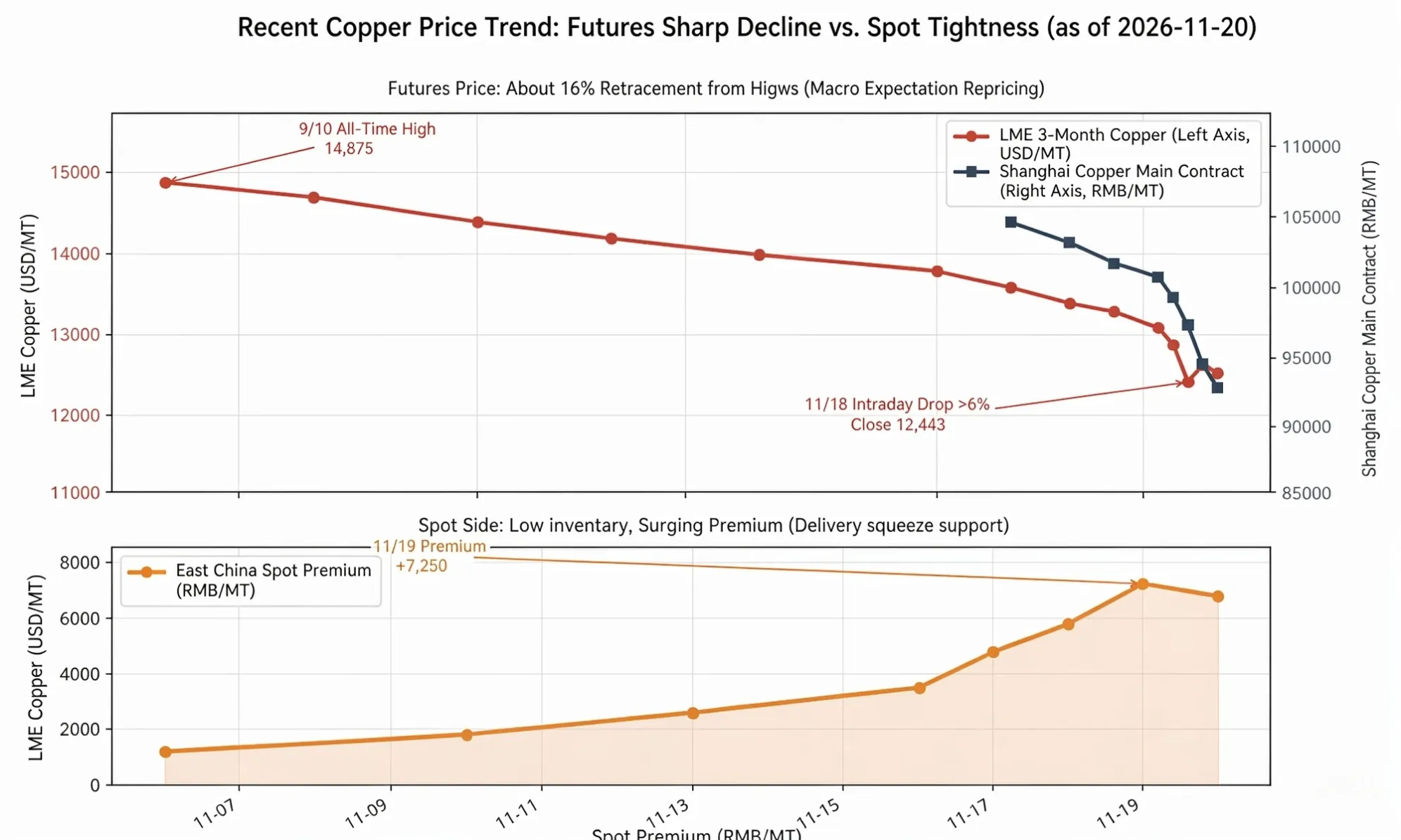
This round of "oil price decline + metal futures slump" is not merely a positive factor; it is a combination of "a sigh of relief at the cost end, an alarm at the demand end, and a blow to resource countries". As of November 20, 2026, Brent crude has retreated by approximately $20 per barrel from its October high, while copper prices in Shanghai have fallen by more than 10% this week, and silver/palladium prices have dropped by more than 7% in a single day. The main reason is the rising expectations of the Federal Reserve's interest rate hikes + the strengthening of the US dollar + the cooling of the AI narrative + the accumulation of inventories. It is not that the terminal demand has truly improved.
For the global economy: Inflation has decreased, but the recession flavor is stronger.
• Developed manufacturing/consumer countries (China, Europe, Japan, South Korea): The input inflation pressure has eased, energy and metals account for a high proportion of the PPI, the year-on-year PPI will be pushed down, the central bank's interest rate cut space has opened up a little, household oil expenses, electricity costs, car loan costs have decreased, and other consumption is released.
• Resource-exporting countries (Russia, Saudi Arabia, Australia, Brazil, Chile, Guinea, etc.): The trade conditions have deteriorated, fiscal deficits have expanded, and the pressure of the local currency depreciation has risen. The economies in emerging markets that rely on mining/oil for their livelihoods are the most uncomfortable.
• Global demand signals are relatively cold: The "economic thermometer" of copper and tin have fallen, often corresponding to the weakening of the global manufacturing PMI and the downward revision of the AI capital expenditure expectations; but the copper supply end is still tight, and the aluminum forward supply is in surplus, so it is not a complete collapse, but a macro-level valuation kill + local fundamentals differentiation.
• Side effects: The low price of energy will drag down the returns of green electricity/energy-saving renovation investments, mining capital expenditures will decline, and in the next 2-3 years, it may actually lay down the mine supply shortage risks.
For China's foreign trade: The import end enjoys benefits, while the export end looks at bargaining power.
- Import costs have actually dropped
China's dependence on foreign oil > 75%, copper concentrate > 80%, iron ore > 80%. The decline in US dollar-priced commodities + if the RMB is relatively strong, the landed costs will both decrease.
- Refining, chemical fibers, plastics, rubber, wires and cables, household appliances, sheet metal, auto parts, steel structures: BOM costs have fallen, and gross profits have been restored. • But note: Spot premiums, long-term contracts with price lock, and reverse exchange fluctuations will eat up part of it, not the invoice immediately matching the futures decline.
- Export quotation window period, but don't rush to lower prices
- Homogeneous categories (textiles, furniture, daily hardware, low-end consumer electronics): Overseas buyers will use "the raw materials have fallen" to negotiate for price cuts, exchange rate + material difference is easily negotiable, thin-profit categories (net profit < 5%) are the most dangerous. • Those with barriers (AI hardware, mechanical and electrical, new energy components, high-end equipment): Cost reduction of raw materials becomes profit, it is not necessary to lower prices, the proportion of high-tech exports in the first 10 months of 2026 has exceeded 60%, these enterprises benefit the most.
- Sea freight has not fallen along with the decline (shipping companies on the European route are still raising prices), "material price falls but transportation does not fall" will offset part of the benefits.
- Two-pronged industries
• Mining companies/processing/resource traders: Inventory price decline losses, high-incoming-low-outgoing long-term contracts.
• Import materials + export finished products dual exposure enterprises (aluminum processing, copper processing, midstream petrochemicals): If the RMB adjusts, the benefits from the import end will shrink, and the exchange rate impact on the export end will be a loss, they must lock the exchange rate + lock the materials simultaneously.
- Surplus and PPI
Decrease in import payment for foreign exchange → the trade surplus appears better on paper; the decline in the month-on-month PPI → alleviates the cost anxiety of midstream manufacturing, but also increases the risk of imported deflation, CPI weak, enterprises dare not raise prices.
One-sentence characterization
• Global economy: Inflation has cooled down, growth has been warned, resource countries have lost blood, manufacturing countries are gasping.
• China's foreign trade: Importers are first sweet, exporters look at bargaining power, resource-based traders are beaten, overall surplus is inflated but midstream profits have been restored.
• The real risk is not "falling", but falling too fast + the US dollar is too strong + demand has not caught up - long-term contracts with old costs signed should be re-calculated, new orders should not directly pass on the futures decline to customers.